Adding Life to Years: Social Connection as the Heart of Healthy Ageing
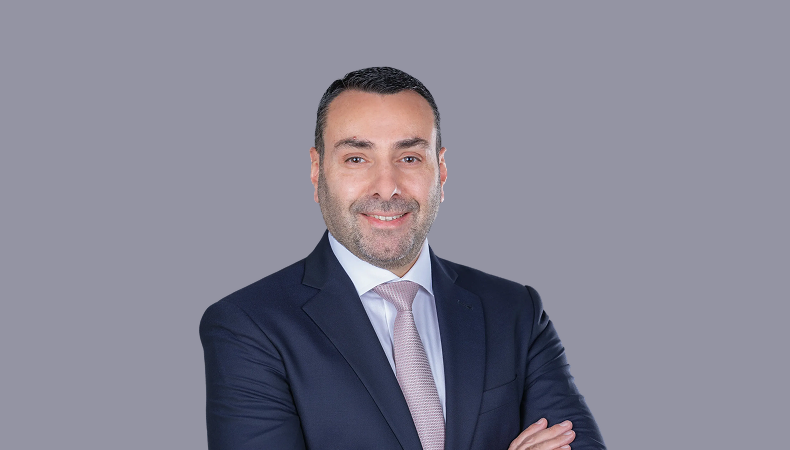
Slim Slama, CEO WISH-QF
At 93, she was medically stable—but socially disappearing.
We often start discussions of longevity with numbers: life expectancy, ageing curves, the size of the “over 65” population. But these figures rarely capture what it means to grow old. Having worked in emergency rooms, hospital wards, global health, and policy at WHO, I’ve learned that these statistics only scratch the surface. What truly matters is people.
As a student in Geneva, I was assigned to visit an elderly woman every Saturday morning. She was 93 and lived alone in a modest, working class neighbourhood. Her world had gradually shrunk to the space around her bed, surrounded by a lifetime of belongings. Nurses came. Social workers came. On paper, the system was there. But there was almost no family contact and no outings. Her life was medically safe, but very small.
Her name was Louise Gouillet. At the time, I only knew fragments of her story from our conversations and from the photographs she kept close. Later, I discovered that a Geneva-based publishing house, Éditions Zoé, had actually published her life story under the simple title “Louise.” The book follows her journey as a working-class woman born in 1898, who moved to Geneva in 1926 to join her future husband, a travelling upholsterer. It traces almost a century of change in the city through her eyes, and has become recognised as one of the early, landmark “récits de vie” that gave voice to ordinary people and to what is often called the “mémoire ouvrière,” the worker’s memory, of neighbourhoods such as La Jonction. I had, without realising it, been visiting not just a “case” or a “beneficiary,” but a woman whose life had already been carefully documented as part of Geneva’s social history.
Over time, I became part of her routine. One morning, she asked me to take an old photo reel from her camera. We sat next to each other and looked at photos of holidays in Brittany and family celebrations. In those images, she was a young working woman, full of movement, relationships and purpose. In that moment, the frail woman in the bed and the vibrant woman in the photographs were one continuous story. Her health wasn’t just a list of diagnoses. It was the sum of her roles, connections and memories. That experience has stayed with me. It reinforced something that has become clearer with each year of clinical and policy work. Health is not only about medical care. It is also about belonging, dignity and purpose.
This is why the Japanese term “kodokushi,” lonely death, feels so unsettling. It describes people who die alone and remain undiscovered for days or weeks. Behind the word are lives that have slowly slipped out of view. It is often the result of profound demographic and social shifts—urbanisation, ageing populations, and the erosion of traditional family and community structures. Japan is not unique. Around the world, more people are living longer, often alone and with thinner social networks. We celebrate gains in life expectancy while quietly struggling with the reality that many older people are ageing without the social networks that give life meaning.
The evidence is now very clear. Loneliness and social isolation in older age are linked with higher risks of depression, cognitive decline, heart disease and premature death. WHO’s Decade of Healthy Ageing and its work on social connection recognise isolation as a major public health issue, not a soft, secondary concern. Yet our systems remain largely organised to diagnose and treat disease rather than to sustain connection.
Healthy ageing is frequently framed as an individual project. Eat well, exercise, stop smoking, and take your medicines. These matter. But no amount of personal discipline can compensate for settings that make older people invisible. On a night shift in the emergency room, you quickly see the difference between an older patient who arrives with family or neighbours and one who arrives entirely alone. Clinically, their conditions may be similar. Humanly, their situations are worlds apart.
In Arabic, there is a proverb: “He who grows up doing something will grow old doing it.” Man shabba ʻalā shayʼin shāba ʻalayh. We use it to talk about habits, but it also applies to relationships. The social roles and routines we build over a lifetime do not lose value as we age. If anything, they become even more protective. Another saying reminds us, “Knowledge in childhood is like engraving on stone.” The respect, closeness and intergenerational solidarity we engrave early will shape how we treat older people later, and how we ourselves will be treated when our hair turns white.
Globally, the conversation about ageing is shifting. WHO defines healthy ageing as maintaining the functional ability to be and do what people value in older age. That definition quietly pushes us beyond survival. It asks whether an older person can still walk to the mosque, the church or the market; attend a grandchild’s school event; argue about politics with friends; tend a garden; volunteer in the community. These everyday activities are not side notes. They are the core of what makes added years worth living.
If we take this seriously, social connections must be seen as basic infrastructure. We have long accepted that roads, water, electricity and now digital access are essential for health.
Social connection should sit alongside them. WHO and others are documenting how community groups, befriending schemes, “age-friendly” public spaces, and inclusive transport can reduce isolation and improve wellbeing when intentionally designed. Often, these are modest interventions. A safe bench on a street. A community centre that stays open in the evening. A regular, unrushed visit. The impact can be profound.
But recognising this is not enough. Social connection must be embedded into policy, measured, and funded. We also need to look beyond the health and social sectors. Longevity and healthy ageing are shaped by housing, transport, urban planning, technology, finance, culture and media. The story of the Yakult delivery women in Japan, who bring not only yoghurt but also human contact to older people living alone, is a small but powerful illustration. A product designed for gut health became, through its delivery, a channel for social connection. That is not charity of public relations. It shows how the private sector can contribute meaningfully to healthier ageing ecosystems when it recognises the lived realities of its customers.
In our region, we can learn from such examples while drawing on our own traditions. Many Arab societies still hold strong ideals of family responsibility and respect for older people, even as modern life strains those patterns. Smaller households, urban living, and the mobility of younger generations are reshaping traditional support systems.The task ahead is not to romanticise the past, but to translate its best values into new forms that fit urban, mobile, two-income, digital lives. That might mean designing housing that keeps generations closer, creating roles for older people in schools and civic life, or using technology to support rather than replace human visits.
Governments are increasingly aware of these problems, but awareness alone is not . enoughSocial connection should be treated as a core indicator of healthy ageing, integrated into national strategies, primary care, and urban policy. Now we must broaden our definition of “health work” to include the quiet, relational acts that keep older people anchored to their communities. Support weekly visits, encourage neighbours to check in, and recognise delivery workers who offer conversation as crucial contributors to a more dignified ageing process. Take steps to ensure older people remain connected and valued.
Longevity is often presented as a triumph of science, and it is. But if longer lives are spent in isolation, with shrinking horizons and a fading feeling of purpose, we will have missed the real goal. Our main challenge is not just to add years to life, but to ensure these years are meaningful, connected, and dignified. The real measure of success will be whether people can keep doing what matters to them, for as long as possible, surrounded by others who know who they are and who they have been.
The question is simple: when someone like Louise reaches 93, will she still be seen?
Turning this vision into reality means building societies where added years are not only longer, but richer in meaning, connection, and dignity.