


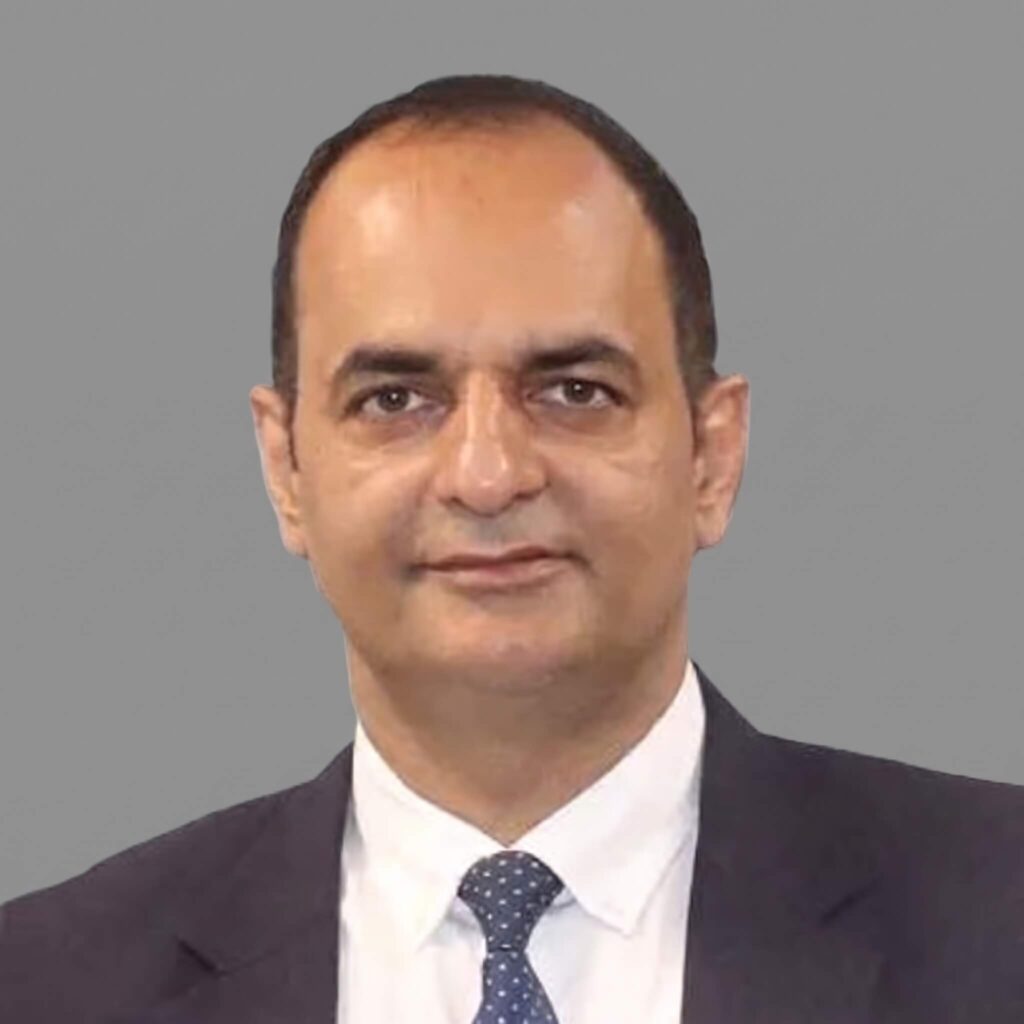
Professor Sachin Kumar Sharma
Professor Sharma brings over two decades of expertise in international trade, development cooperation, and multilateral and regional negotiations. His research, advocacy, and capacity-building work have shaped discussions on trade and development, agricultural subsidies, investment, food security, sustainability, market access, trade disputes, transparency, graduation from least developed country (LDC) status, Aid for Trade, and negotiations at the World Trade Organization (WTO), Food and Agriculture Organization, G20, as well as within regional trade agreements.
He holds an M.Phil. and a PhD in Economics from Jawaharlal Nehru University, Delhi, with a specialization in WTO policy, international trade, quantitative techniques, and agricultural policy. He is skilled in econometrics, computable general equilibrium modeling using the Global Trade Analysis Project model, partial equilibrium modeling, and statistical tools, with extensive experience in trade analytics.
A prolific scholar, Professor Sharma has authored six books, numerous peer-reviewed journal articles, several working papers, and book chapters. He also regularly contributes to policy debates through articles in leading newspapers and participation in global forums.
Previously, he served as a Professor at the Centre for WTO Studies (CWS) at the Indian Institute of Foreign Trade, where he led and supervised a multidisciplinary team of economists, lawyers, and officials working on a wide range of economic, development, and legal issues. His evidence-based policy inputs, analysis, and recommendations were extensively utilized by many developing countries and LDCs to comply with WTO obligations and advance negotiations on agriculture and sustainability, including efforts to secure the perpetual peace clause on food security and shape disciplines on domestic support.
Through knowledge sharing, substantive input on proposals, and capacity-building initiatives, he also coordinated with key members of the G-33 to develop and advocate common negotiating positions among senior policymakers from developing countries and LDCs.
Representing India, he made significant contributions to South-South cooperation through WTO proposals on domestic support, sustainability, food security, cotton, Special and Differential Treatment, and several other issues, many of which were co-sponsored by 75 countries from the G-33, the Organisation of African, Caribbean and Pacific States, and the African Group. His initiatives played a pivotal role in invoking the Bali Peace Clause, thereby safeguarding India’s public stockholding programs for food security from WTO disputes.
As an integral member of the Indian delegation, he played a crucial role in negotiations at the last five WTO Ministerial Conferences. He has conducted numerous training programs on trade issues to strengthen South-South cooperation and has collaborated with leading organizations, think tanks, and UN agencies.
As Director General of the Research and Information System for Developing Countries (RIS), he envisions strengthening RIS as a leading institution of the Global South, providing cutting-edge, development-oriented research and policy dialogue on contemporary global economic challenges. He aims to further RIS’s mission of fostering South-South cooperation, supporting evidence-based policymaking, and ensuring that the voices of developing countries are strongly represented in international economic discourse.